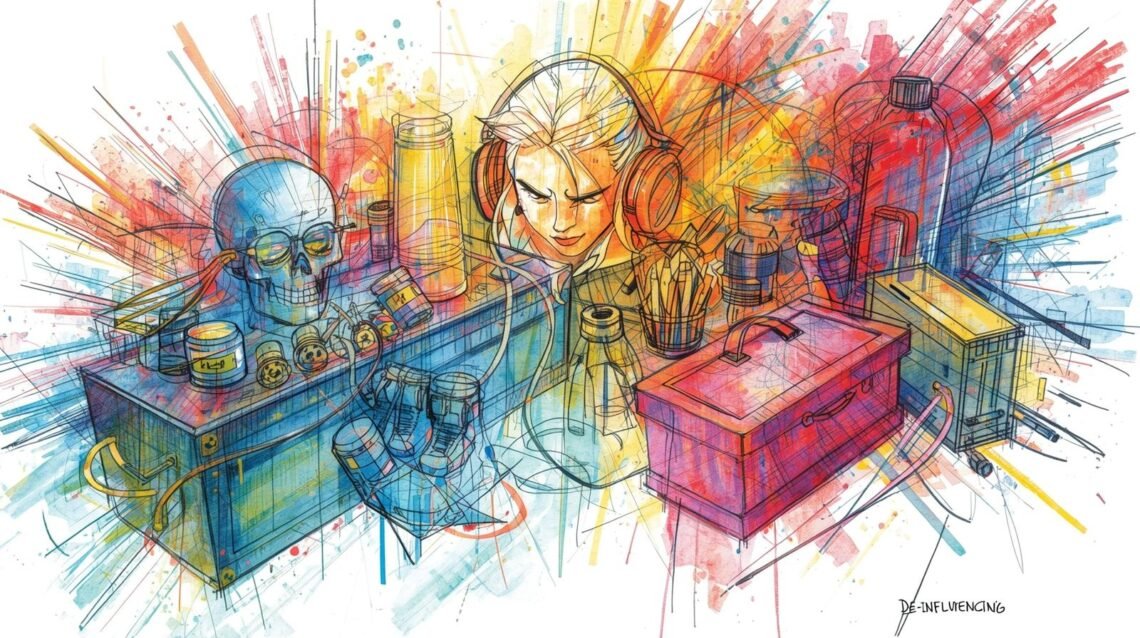
What is De-influencing? It’s when someone posts content meant to talk you out of buying the viral thing—usually by pointing out the annoying real-life downsides the glossy videos skip.
You’ve seen it. A “DE-INFLUENCE ME” comment under a cart video. A stitch that starts with “No, actually…” A creator holding the item up like evidence in court.
And honestly? My credit card didn’t need another hobby.
What is de-influencing (fast, human version)
Answer Box
- Meaning: De-influencing = content that discourages a purchase by calling out hype, poor value, or hidden drawbacks.
- When people use it: When something is trending hard and everyone feels pressured to buy it right now.
- One example: “That ‘spillproof’ bottle leaks if you toss it in a bag because the lid seal is flimsy.”
- Don’t do this: Don’t use “de-influencing” to shame people for liking things.
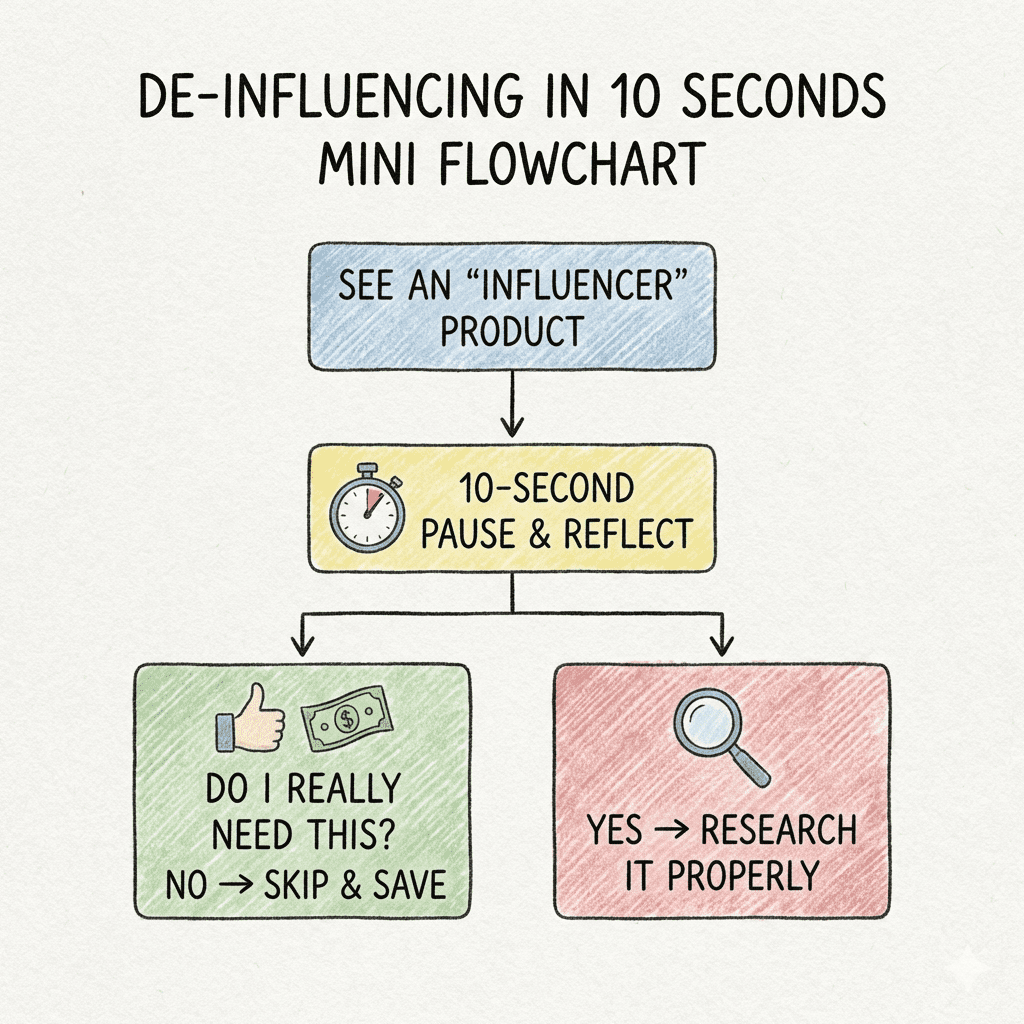
De-influencing is basically the pause button on your cart. (That’s the one metaphor I’m allowing myself.)
De-influencing is consumer advice with a side of ‘please don’t make my mistake.’
FAQ people actually Google after seeing “de-influence me” everywhere
Is de-influencing the same as anti-haul?
Close. Anti-haul is often “I’m not buying these new drops.” De-influencing is more direct: “Don’t buy that specific thing and here’s why.”
Is de-influencing just being cheap?
Not necessarily. Sometimes it’s value, sometimes it’s practicality, sometimes it’s “this is cute on camera and annoying in real life.” Those aren’t the same.
Where do people say “de-influence me”?
Mostly in short-form video comments, especially under “haul” or “TikTok made me buy it” style posts. It’s like asking the group chat to hold your hand away from checkout.
Can de-influencing still be… influencing?
Yeah. And this is the sneaky part. Some posts “de-influence” one item and then conveniently redirect you to a different purchase. That can be genuinely helpful or just… the same sales move in a different hoodie. You know what I mean?
How do I use the term without sounding cringe?
Use it like you’re being practical, not dramatic.
“Can someone de-influence me from buying this?” = normal.
“I am de-influencing you all from participating in capitalism” = okay professor.
What’s a sign a de-influencing post is legit?
Specifics. Real details. Someone showing the hinge wobble, the peeling label, the actual size next to their hand, or the return screen they had to hunt for.
What’s a red flag?
Vague + mean. If the whole message is “this sucks” with zero reason, it’s not de-influencing—it’s just dunking.
Why it started (and why it hit a nerve)
I think de-influencing caught on for one simple reason: people are tired of being sold to 24/7.
Shopping content got really good. The lighting is perfect. The captions sound like confident friends. The “limited drop” language makes your brain go feral. Have you ever bought something mostly because the video made it look effortless?
Here’s the surprising detail people don’t say out loud: de-influencing is also a “trust flex.” Some creators do it to signal “I’m honest,” because being the one who talks you out of a purchase earns a different kind of attention. Not bad! Just worth noticing.
What it looks like on your feed (with the messy details)
Let’s make this real. De-influencing isn’t “don’t buy stuff.” It’s “don’t buy this for these reasons.”
Example #1: the viral organizer that’s a pain in real life
A video shows a cute clear organizer with little drawers. In the de-influencing stitch, someone taps the plastic and it sounds like a cheap lunchbox. The drawer track catches, so you have to wiggle it open. Dust sticks to it like it’s magnetized. Then they show the worst part: one tiny crumb gets into the corner and you basically need a toothpick and a prayer to clean it out.
Example #2: the “life-changing” app coupon pop-up that won’t stop
You open a shopping app to check one thing. You get: a spinning wheel discount, then a “join for perks” banner, then a countdown timer that resets when you refresh (convenient!). The de-influencing post isn’t about morals. It’s about the UI manipulation: “If it takes three pop-ups to reach the product page, maybe the deal isn’t the deal.”
Example #3: the reviews that don’t match the product option
You click a listing that says “50k reviews.” Then you switch color/size and suddenly the pictures in reviews look like a different item entirely. A good de-influencing post screen-records that exact moment, because it’s the kind of trick you don’t notice until you’ve already paid.
And here’s the mini-story version (because this is how it happens):
It’s late. I’m scrolling in bed.
Someone posts a “must-have” insulated cup with a cute color name and a satisfying lid click.
Comments are screaming “RUNNNN” like it’s a fire drill.
I’m like, “It’s not even expensive.” (Famous last thought.)
I buy it. Two taps.
It arrives and doesn’t fit in the cup holder I actually use.
I keep it anyway, because returning it feels like homework.
Now it lives in the cabinet, judging me quietly.
If you’re trying to stop “fake urgency” from pushing you into impulse buys, a price-tracking / price-history tool helps because it shows whether that “sale” is real. […..]
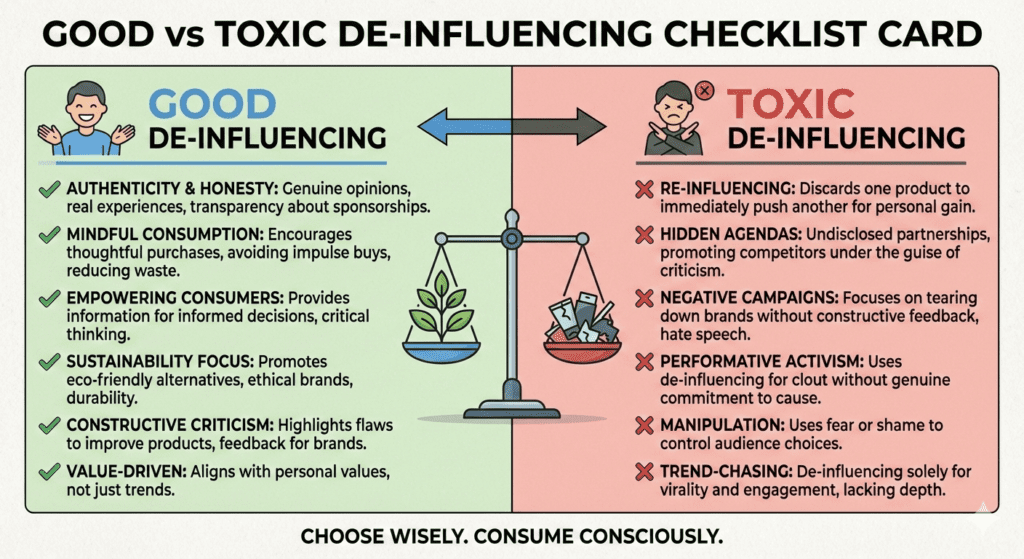
Good de-influencing vs toxic de-influencing (and how to tell in 5 seconds)
Good de-influencing feels like a friend texting you: “Heads up, I tried it. Here’s what I wish I knew.”
Toxic de-influencing feels like: “If you bought that, you’re dumb.” Which is… not advice. It’s just a vibe-kill.
Good de-influencing usually has:
- A clear reason (durability, fit, comfort, hidden costs, return hassle)
- A trade-off (“Cute, but stains easily” is fair)
- Respect for different budgets and tastes
Toxic de-influencing usually has:
- Mocking tone
- Vague complaints with no details
- Shaming people for buying “basic” stuff
Mistakes to avoid (so you don’t sound weird using the term)
Don’t “de-influence” someone after they already bought it. Let people enjoy their things.
Don’t confuse “I don’t like it” with “it’s objectively bad.”
And please don’t use “de-influencing” as a personality. Once in a while is helpful. Every day becomes… exhausting.
If you want to catch “sponsored but not obvious” posts faster, a deal alert + notes system (even a simple tracker) helps you separate “I want this” from “I was nudged into this.” […..]
TikTok has a plain explanation of how branded content labels work in their [branded content policy] pages.
Don’t confuse de-influencing with these related terms
De-influencing vs influencing
Influencing is “buy it, it’s amazing.”
De-influencing is “don’t buy it, here’s what the video didn’t show.”
Same stage, different script.
De-influencing vs “reviews”
Reviews usually happen after the hype wave. De-influencing happens during the hype wave, when everyone’s still emotionally attached to the idea of owning the thing.
De-influencing vs “minimalism”
Minimalism is a lifestyle preference. De-influencing is more like a tactic: it’s used when a trend is pushing you toward a purchase you might regret.
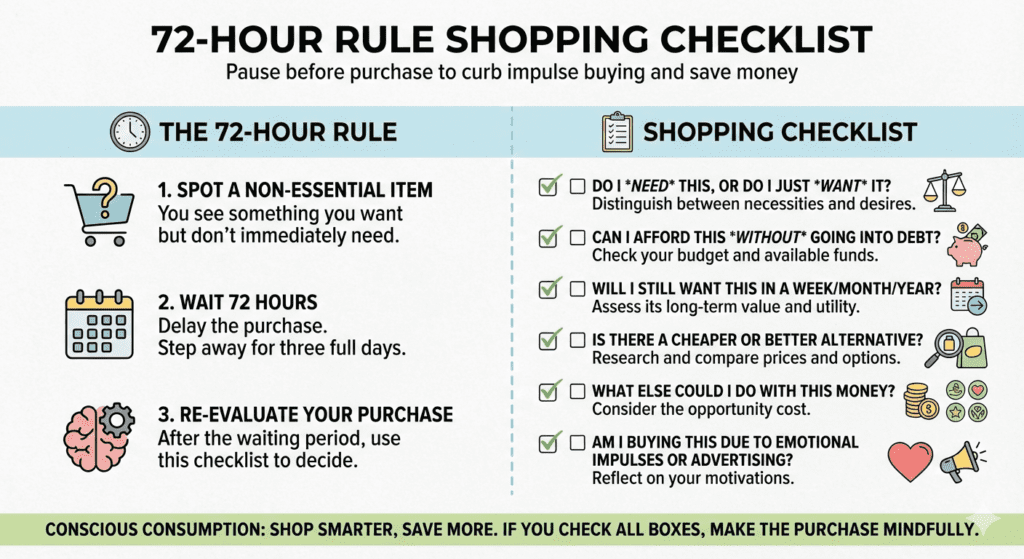
The calm shopping checklist (aka de-influence yourself gently)
If you want the peaceful version of this trend, here’s a checklist that doesn’t require yelling into the comments:
The 90-second “do I actually need this?” check
Ask yourself:
- What problem is this solving specifically?
- Where will it live when I’m not using it?
- What’s the annoying part nobody films? (cleaning, charging, refills, returns)
- Would I still want it in 72 hours?
- If I’m buying it because it’s “cheap,” would it still feel worth it if it breaks fast?
If you’re trying to avoid impulse buys without turning shopping into a second job, a cashback tool can at least make planned purchases less painful. […..]
If you’re trying to buy fewer things but better things, keep a “best value” list (notes app, spreadsheet, whatever) where you write one sentence after a purchase: “Worth it because…” or “Not worth it because…” Future-you will thank you.
And if you’re reading this with three tabs open and a cart you don’t remember building… yeah. Same. Close one tab. Drink water. De-influence yourself like a legend.