
Loud budgeting is that new-ish vibe where you stop pretending you’re “busy” and just say the real thing: it’s not in my budget. Not as a sad confession. More like a boundary with a little spine.
And yeah, you’re seeing it everywhere — in TikTok comments under $38 brunch videos, in group chats when someone suggests “quick weekend trip,” and in the slightly chaotic “treat yourself” era where every app is trying to sell you something before you’ve even had coffee.
It’s basically the opposite of making up excuses. No mysterious “family thing.” No “maybe next time!” that turns into you panic-buying concert tickets you didn’t even want.
I used to think saying “it’s not in my budget” sounded dramatic. I ignored this for way too long.
Loud budgeting, in plain English
Loud budgeting = being open (sometimes funny, sometimes blunt) about what you’re spending and what you’re not spending, so you don’t get nudged into random money leaks.
It’s not “I’m broke.” It’s “I’m choosing where my money goes.”
A quote-friendly line you can steal: Loud budgeting is saying “no” without inventing a fake reason.
Answer Box: what “loud budgeting” means (fast)
- What it means: openly saying something isn’t in your budget — and meaning it.
- When people use it: social invites, online shopping moments, “split the bill?” situations, and family/friend money pressure.
- One example: “I’m loud budgeting this month — I’m skipping dinners out so I can pay off my card.”
- Don’t do this: don’t turn it into a lecture or a flex. Nobody asked for Budget TED Talk.
FAQ: loud budgeting (the stuff people actually search)
Is loud budgeting just being cheap?
Not really. Cheap is “I don’t want to spend money, ever.” Loud budgeting is “I’m spending money — just not on this.”
Do I have to tell people my exact numbers?
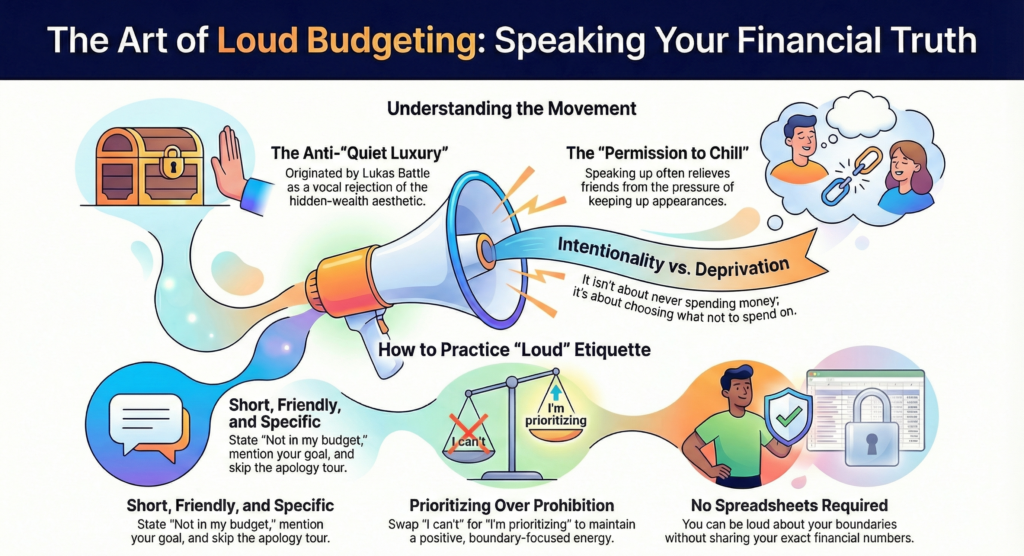
Nope. You can be loud without giving a spreadsheet. “Not in my budget” is a complete sentence.
What if my friends judge me?
Some might. (That’s information.) But a lot of people feel relieved when someone says it first — it gives everyone permission to chill.
Can loud budgeting work if I’m bad at budgeting?
Yes, but it helps if you have some plan, even a messy one. Otherwise it becomes “I’m loud budgeting” while adding $27 worth of “little treats” to your cart at 1 a.m.
Is loud budgeting only a Gen Z thing?
It’s loud online right now, but the behavior is old-school: setting spending limits and sticking to them. The trend just gave it a name people actually want to say out loud.
Where did the term come from?
Most people trace it to TikTok creator Lukas Battle, who framed it as the opposite of “quiet luxury.”
What’s the best way to say it without sounding awkward?
Short, friendly, and specific. “Not in my budget — I’m saving for X.” Then move on. No apology tour.
Can I loud budget without being negative?
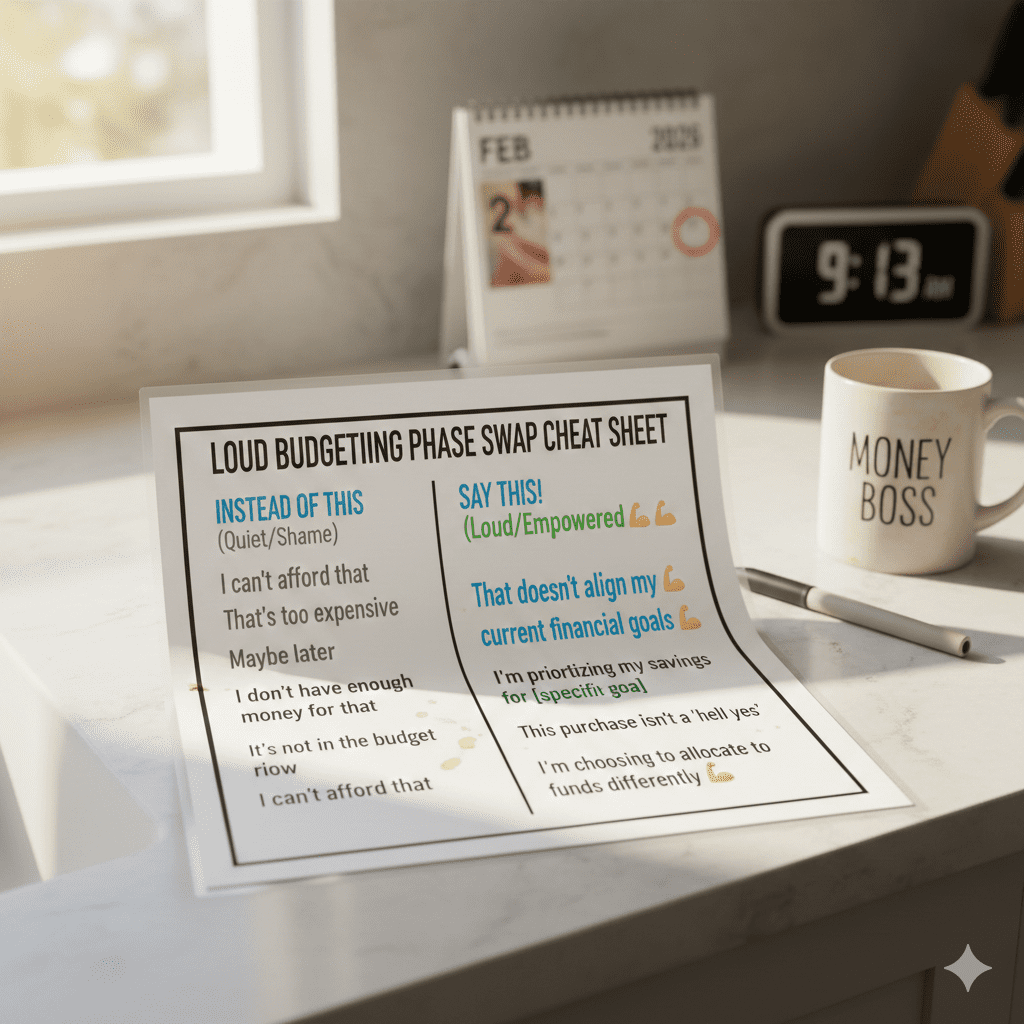
Yes. Aim for “I’m prioritizing” instead of “I can’t.” Same boundary, less gloomy energy.
How loud budgeting sounds in real life
Here are a few phrases people actually use (and yes, you can tweak them so they sound like you and not a caption):
- “That’s cute, but I’m loud budgeting right now.”
- “I’m skipping drinks — I’m saving for my plane ticket / braces / rent / peace of mind.”
- “I can afford it. I’m just not buying it.”
- “I’m doing a no-spend week, so I’m bringing snacks like a grandma.”
- “I’m down to hang, but can we do a free version?”
I can afford it. I’m just not buying it.
Mini-story: the moment it clicks (6–10 lines)
You’re out with friends.
Someone says, “Let’s just split everything evenly.”
And you’re staring at the table like… you had one iced tea and a side of fries.
Your brain starts doing the math gymnastics.
You almost say, “I’m not that hungry anyway,” even though you are hungry.
Then you hear yourself go, “I’m loud budgeting — can I just pay for what I ordered?”
Tiny pause.
Then someone else goes, “Wait, honestly… same.”
And suddenly it’s not weird anymore. It’s normal.
The surprising part people miss about the vibe
Here’s what nobody says out loud (lol) about loud budgeting: it’s not always about having less money — it’s about having less patience for social-pressure spending.
A lot of loud budgeters aren’t broke. They’re just tired of the sneaky ways money disappears:
- the “we have to do dinner” expectation,
- the “just one more add-on” checkout,
- the subscription you forgot existed until your bank app roasted you with a notification.
It’s like wearing noise-canceling headphones in a mall. You can still walk around, but you’re not hearing every “BUY ME” siren.
Also… it’s weirdly common among people who are responsible in private but got tired of acting “chill” in public. Loud budgeting is basically social permission to be practical.
How to start loud budgeting without becoming unbearable
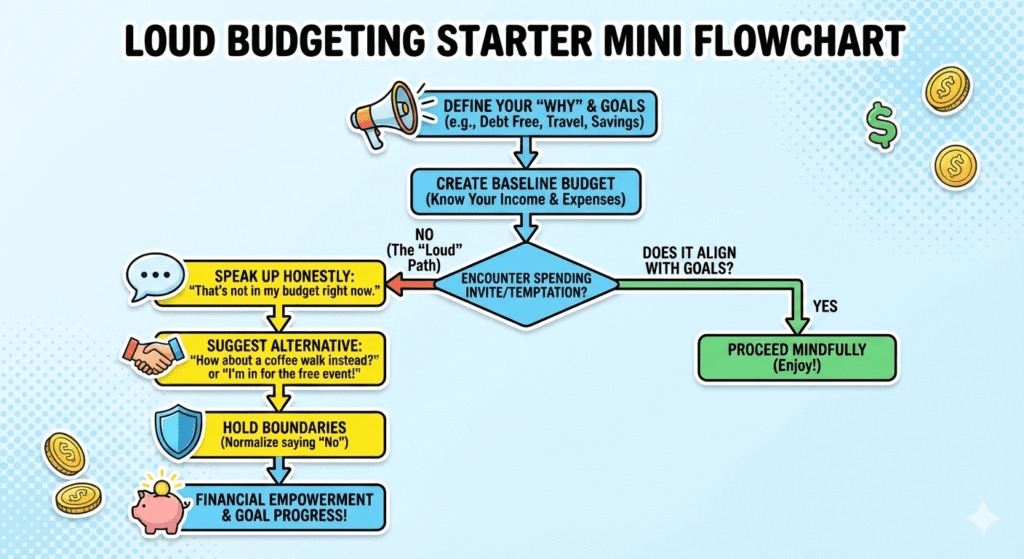
You don’t need a perfect system. You need a few simple defaults you can repeat when your brain is tired.
1) Pick one “yes” you’re protecting
A goal helps. Not a fantasy goal — a real one.
- “I want my card balance lower.”
- “I’m saving for travel.”
- “I’m trying to stop impulse buying at night.”
That’s your anchor. Everything else is just noise.
2) Decide your “no” categories (two is enough)
Not forever. Just for now.
Examples: delivery apps, random Amazon-ish browsing, drinks out, impulse clothes.
Tiny checklist you can screenshot:
- One “yes” goal
- Two “no” categories
- One phrase you’ll use when pressured
3) Use one tool that makes it harder to lie to yourself
Because willpower is cute until you’re tired.
If you’re trying to see where your money actually goes, a budgeting app that auto-categorizes spending and shows weekly totals can help. [….]
(You know the kind — it’ll also annoy you by categorizing your grocery store run as “Shopping” and your coffee as “Dining,” but it’s still useful.)
If you’re trying to stop checkout regret, a coupon tool that tests codes automatically at checkout can help. […..]
(Just don’t let it turn into “I saved 15% so I had to buy it.” That’s not saving. That’s a coupon-induced hallucination.)
If you want “free money” energy without effort, a cashback extension that reminds you to activate rewards can help. […..]
(Yes, the pop-up can be annoying. Yes, it sometimes opens a new tab at the worst moment. Still… it adds up for some people.)
If you’re motivated by tiny wins, a savings challenge tracker with reminders can help. […..]
Think: “no-spend weekend,” “52-week challenge,” or “round-ups,” depending on what you’ll actually stick with.
Don’t confuse loud budgeting with these (similar vibes, different rules)
Loud budgeting vs. no-spend challenge
- No-spend challenge: usually time-boxed (“no spend week/month”), more like a game.
- Loud budgeting: ongoing social boundary (“I’m not spending on that”), more like a habit.
Example: No-spend is “I’m not buying coffee all week.” Loud budgeting is “I’m not buying coffee out today because I’m saving for something.”
Loud budgeting vs. “cash stuffing”
- Cash stuffing: a physical method (envelopes, categories, cash allocation).
- Loud budgeting: a communication style (what you say to people, and sometimes what you post).
You can do both. You can also do neither and still say, “Not in my budget,” without bursting into flames.
Loud budgeting vs. “girl math” / joke math trends
- Joke math trends are for laughs (and sometimes denial).
- Loud budgeting is the opposite of denial. It’s saying the quiet part out loud.
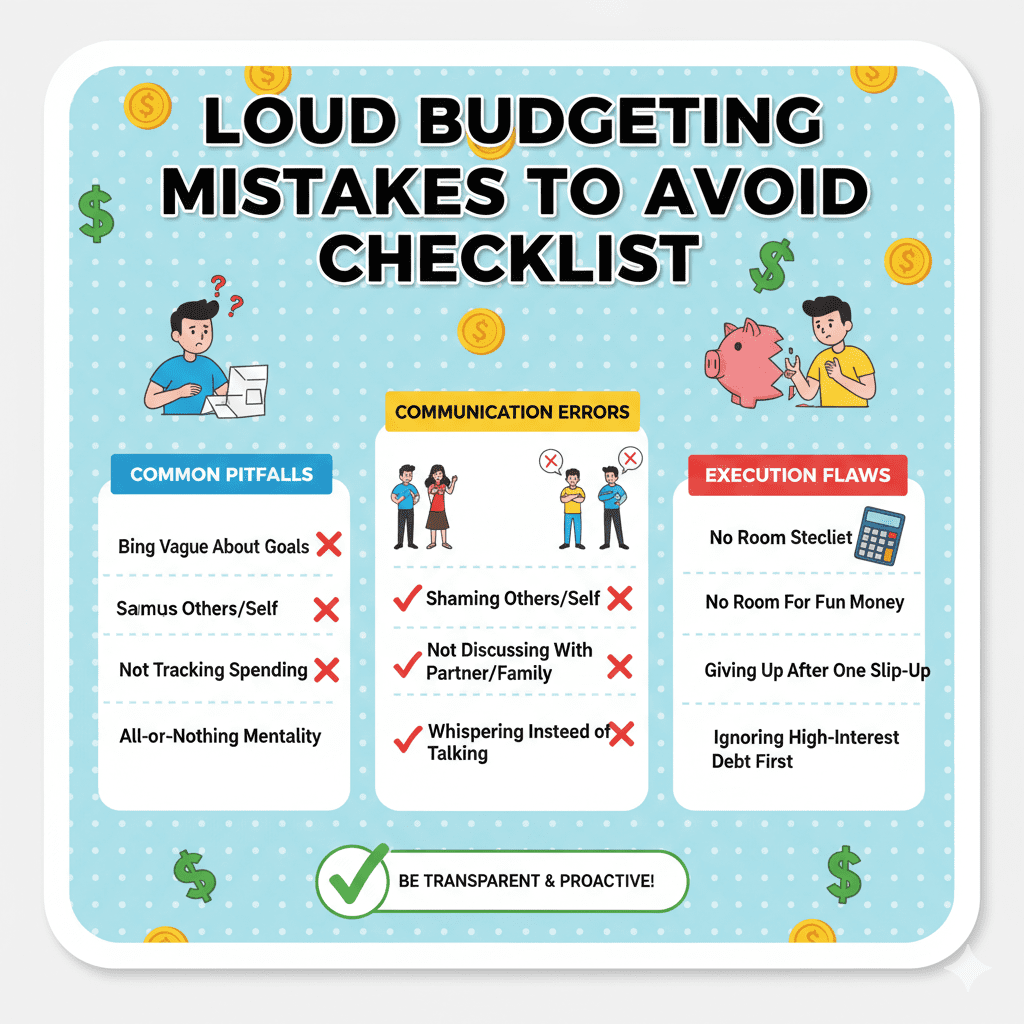
Cringe traps (aka mistakes to avoid)
Loud budgeting is great until it gets… weird. Here are the common misuses:
- Being loud at people instead of loud about your plan.
“I’m loud budgeting” isn’t a reason to comment on someone else’s purchases. Let them live. - Oversharing your finances like it’s content.
You don’t owe anyone your paycheck breakdown. - Using it as a humblebrag.
“I’m loud budgeting” + a screenshot of your savings every day can start to feel like a flex, not a boundary. - Saying no to everything and calling it budgeting.
That’s just miserable. Loud budgeting works best when you still have some “yes” moments.
A budget isn’t a punishment. It’s a plan.
One last thing (because someone needs to say it)
Loud budgeting isn’t about being stingy. It’s about being honest before your bank app has to humble you with a notification.
Try it once this week. Just once. The next time someone suggests something expensive, say: “Not in my budget — but I’m down for a cheaper version.” Then watch how many people suddenly exhale like you opened a window.